


What Are Long-Tail Keywords and How Do They Work?
But there is more to the concept than simply adding more words to a search query.
For example, someone searching for “SEO” has a very broad requirement. But someone searching for “how to do SEO for a small business website” has a much clearer goal.
This is where long-tail keyword research becomes useful.
In this guide, we will understand what long-tail keywords are, how they work, why they matter for SEO, how they are different from short-tail keywords, and how you can find the right ones for your website.
After working in digital marketing for 19 years, I have seen one thing repeatedly: businesses often chase high-volume keywords without first understanding what their audience is actually searching for. A smarter SEO strategy starts with search intent, not just search volume.
What Are Long-Tail Keywords?
For example:
However, there is one important misconception to clear up.
A long-tail keyword does not have to contain a specific number of words. A keyword can be relatively short and still have low search demand, while a longer phrase can have substantial search volume. The idea of “long-tail” is more closely connected with search demand and specificity than simply counting words.
So, instead of asking:
How Do Long-Tail Keywords Work?
People do not always search Google using broad keywords. When they know exactly what they want, their searches become more specific.
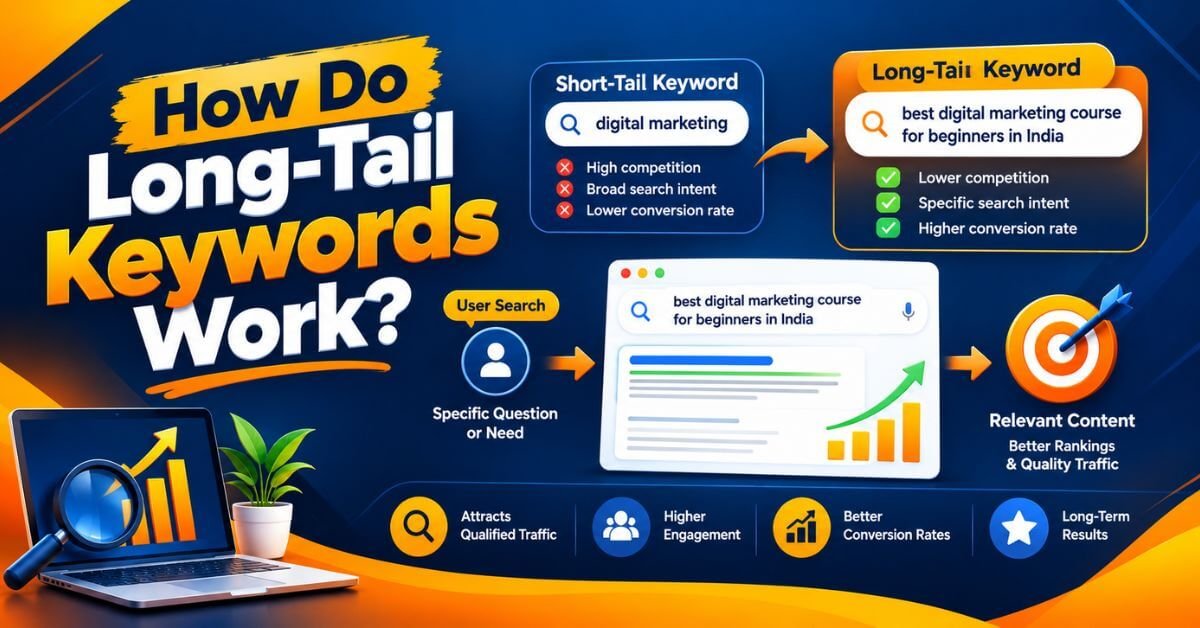
For example:
The third search gives us much more information about the user's intent.
They may be looking for a course, they are probably a beginner, and they may specifically want something relevant to India.
This is why long tail keywords SEO strategies focus heavily on relevance and search intent.
When your content directly answers a specific query, it becomes easier for search engines to understand what your page is about and whether it is useful for that search.
Why Are Long-Tail Keywords Important for SEO?
1. They help you target specific search intent
For example, someone searching for “WordPress” could be looking for:
But a search such as:
“how to create a WordPress website for a small business”
is much clearer.
Your content can directly answer that requirement.
2. They can be useful for newer websites
A newer website may find it difficult to compete immediately for extremely broad terms.
Longer and more specific queries can provide more realistic opportunities because they target narrower topics and audiences. However, it is important not to assume that every long-tail keyword is automatically easy to rank for. Competition depends on the specific query and the pages already ranking for it.
3. They can bring more relevant traffic
Traffic alone is not the goal of SEO.
Imagine two visitors:
Visitor A: Searches “SEO”
Visitor B: Searches “SEO audit checklist for a small business website”
Visitor B has already explained what they are looking for.
If your article provides exactly that information, the visitor is more likely to find your content useful.
That is why long tail keywords for SEO should be selected according to relevance, not simply because they have low search volume.
4. They can support conversational search
Search behaviour is becoming more conversational.
People increasingly search using complete questions and detailed phrases instead of only typing one or two words.
This is particularly important when creating content for modern search experiences, including AI-generated answers and conversational search.
Current SEO research also highlights the growing importance of specific, question-shaped queries in AI-influenced search.
For this reason, your keyword research should not stop at traditional keyword variations.
You should also ask:
What questions would my audience naturally ask about this topic?
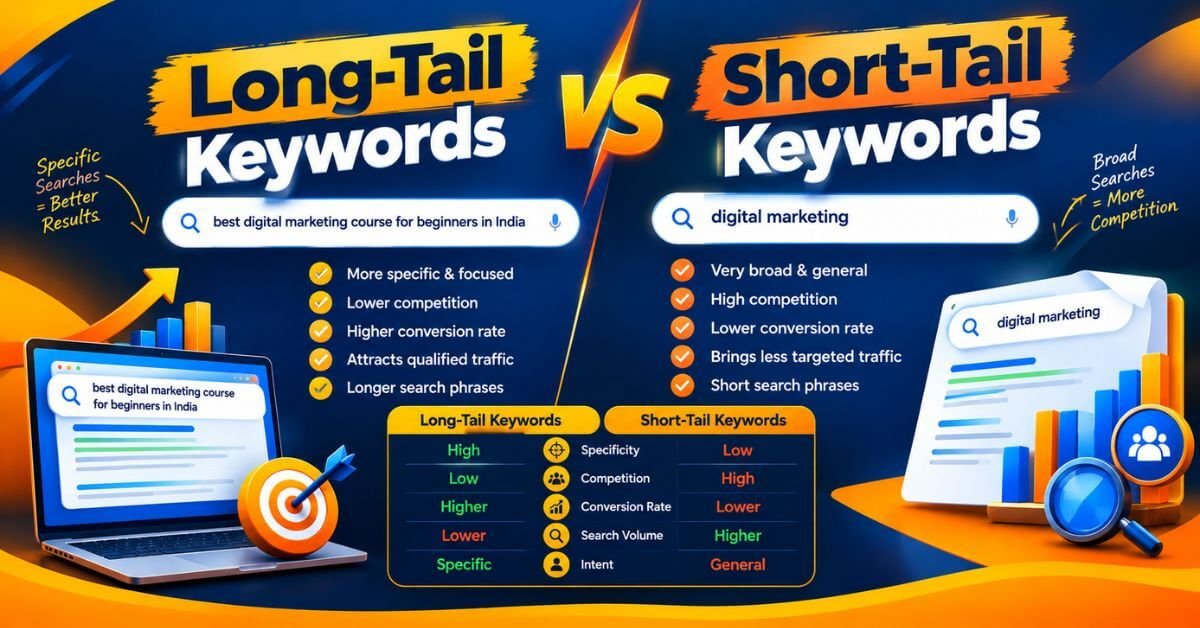
Long-Tail Keywords vs Short-Tail Keywords
For example, “Google Ads” is a broad keyword.
But:
“how to run Google Ads for a small hotel in India”
is much more specific.
Neither type is automatically “better.” A strong SEO strategy can use both.
For a newer website, however, building topical relevance through specific queries can be a practical starting point.
How to Find Long-Tail Keywords?
Now comes the practical part.
You do not need to randomly add words to a keyword and call it long-tail keyword research.
Instead, use multiple sources of real search behaviour.
1. Start With a Broad Topic
First choose your main topic.
For example:
SEO
Then create specific variations around it:
2. Use Google Search Suggestions
Start typing your topic into Google and observe the suggestions.
For example, type:
long tail keywords
Google may show different variations based on actual search behaviour.
You can also explore:
3. Use Keyword Research Tools
Tools such as Google Keyword Planner, Ahrefs and Semrush can help you discover keyword variations.
Start with your seed keyword and look for:
4. Check Your Competitors
Competitor research can reveal topics you may have missed.
Look at the keywords for which relevant competitors are already appearing.
Then ask:
How to Use Long-Tail Keywords in Your Content?
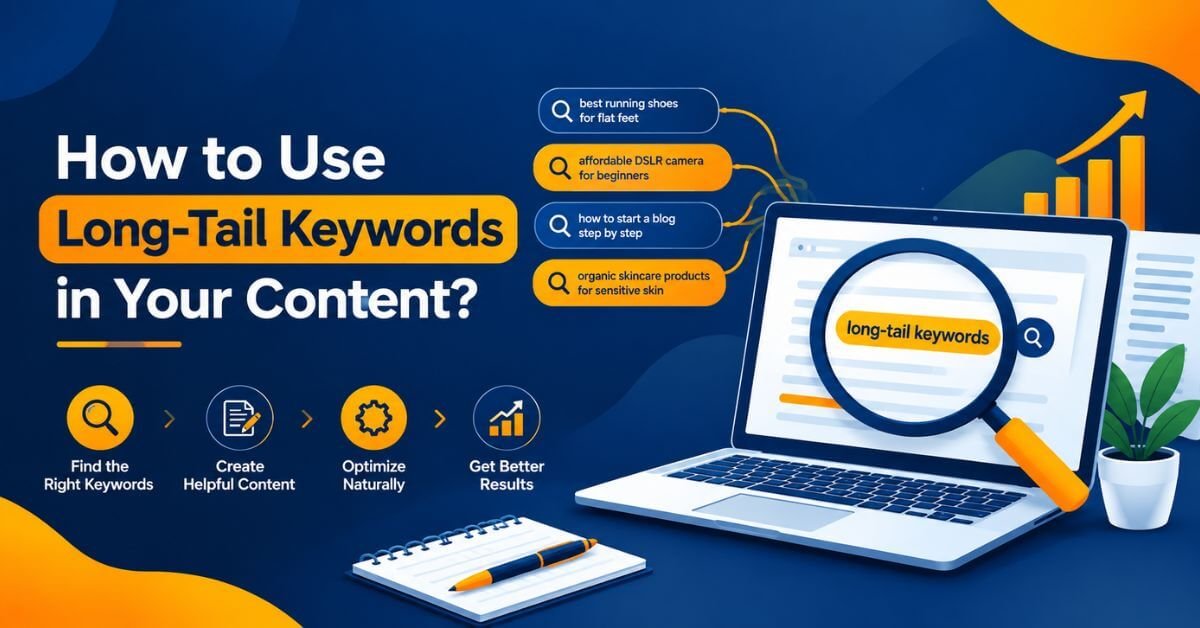
Once you have your keyword list, don't put every keyword into every paragraph.
That is keyword stuffing, and it can make your content awkward for readers while moving you away from Google's people-first approach.
Instead, create a keyword map.
For example:
Primary keyword:
long tail keywords
Secondary keywords:
The reader should never feel that a keyword has been inserted just for SEO.
Long-Tail Keywords Examples
Let's take a simple example from digital marketing.
Broad keyword:
Google Ads
More specific keywords:
Google Ads for beginners
Google Ads for small businesses
how to create a Google Ads campaign
how much does Google Ads cost for a small business
how to reduce Google Ads cost per lead
Notice how each query represents a different requirement.
This is the real power of long-tail keyword research.
Instead of creating one generic article trying to rank for everything, you can build useful content around specific problems and search intents.
Common Mistakes When Using Long-Tail Keywords
Mistake 1: Believing longer always means better
A 10-word keyword is not automatically better than a 3-word keyword.
Relevance and intent matter more than word count.
Mistake 2: Choosing keywords only because they have low competition
Low competition does not automatically mean useful.
A keyword must also be relevant to your business and audience.
Mistake 3: Creating a separate page for every tiny variation
Sometimes multiple keyword variations represent the same search intent.
In such cases, one strong, comprehensive page can cover several closely related searches rather than creating multiple thin pages.
Mistake 4: Writing for keywords instead of people
This is probably the biggest mistake.
Your keyword research should help you understand what people want—not dictate awkward sentences.
How to Build a Long-Tail Keyword Strategy
A practical strategy can look like this:
Step 1: Choose a broad topic.
Step 2: Understand your target audience.
Step 3: Identify their problems and questions.
Step 4: Collect specific search queries.
Step 5: Check search intent.
Step 6: Analyse competition and existing search results.
Step 7: Group similar keywords by topic.
Step 8: Create genuinely useful content.
Step 9: Add internal links to related pages.
Step 10: Monitor rankings and Search Console data.
This approach helps turn keyword research into a proper content strategy instead of a list of phrases.
Final Thoughts
Long tail keywords are not simply keywords with lots of words.
They are an important part of understanding how people search for specific information, products, services and solutions.
The real opportunity comes from matching a specific search query with genuinely useful content.
If you are building a new website or trying to improve an existing one, don't start by asking:
“Which keyword has the highest search volume?”
Start with:
“What exactly is my audience trying to find, and can my page give them a better answer?”
That shift can completely change the way you approach SEO.
And remember—good keyword research is not about putting the same phrase everywhere. It is about understanding search intent, covering the topic completely, using relevant keyword variations naturally, and creating content that deserves to rank.
That is the difference between writing for search engines and building content for people who use search engines.
Whether you need more leads, better online visibility or a complete digital marketing solution, our team is here to understand your goals and suggest the right approach for your business. Get in touch with KishorDigital today and let’s turn your digital goals into measurable results.