


What Is Local SEO? Complete Guide for Small Businesses
What Is Local SEO? Local SEO is the process of improving your business's online visibility so that people in your nearby area can find your products or services through Google Search and Google Maps. It helps small businesses attract local customers, generate enquiries, increase website traffic and build trust in their local market.
Imagine someone searches for "best digital marketing institute near me", "hotel in Dharamshala" or "plumber in Delhi". Google displays relevant local businesses based on several factors, including relevance, distance and prominence.
This is where Local SEO becomes important.
Whether you run a small shop, hotel, restaurant, coaching institute, travel agency or service-based business, Local SEO can help you reach customers who are actively searching for what you offer.
In this complete guide, we will explain how Local SEO works, why it matters, how to improve local rankings and which strategies small businesses should follow.
What Is Local SEO?
Local SEO (Local Search Engine Optimization) is a specialized SEO strategy that helps businesses appear in location-based search results.
Unlike traditional SEO, which generally targets a wider audience, local SEO focuses on customers searching for products and services in a particular geographical area.
For example:
Local SEO helps these businesses connect with relevant customers through Google Search, Google Maps, and other online platforms.
Why Is Local SEO Important for Small Businesses?
For small businesses, attracting customers from the surrounding area can be more valuable than reaching a large audience across the country.
Local SEO helps businesses build visibility among people who are more likely to visit, call or purchase their services.
Here are some important benefits:
1. Increase Local Online Visibility
When your business is properly optimized, it has a better opportunity to appear in relevant local searches.
For example, if someone searches for "digital marketing classes in Ludhiana," a well-optimized local business may appear in relevant search results.
2. Attract More Relevant Customers
Local SEO focuses on people searching for services in specific locations.
These users often have a clear requirement, making them valuable potential customers.
3. Improve Google Maps Visibility
Google Maps is an important platform for local businesses.
An optimized Google Business Profile can help customers discover your business, check directions, view photographs, read reviews, and contact you.
4. Build Customer Trust
Customers often check business reviews, ratings, photographs, contact details and website information before making a decision.
A complete and accurate online presence helps establish credibility.
5. Generate More Calls and Enquiries
Local SEO can encourage potential customers to:
Small businesses may not have the marketing budgets of large companies. However, a focused local SEO strategy can help them compete for relevant searches in their service areas.
How Does Local SEO Work?
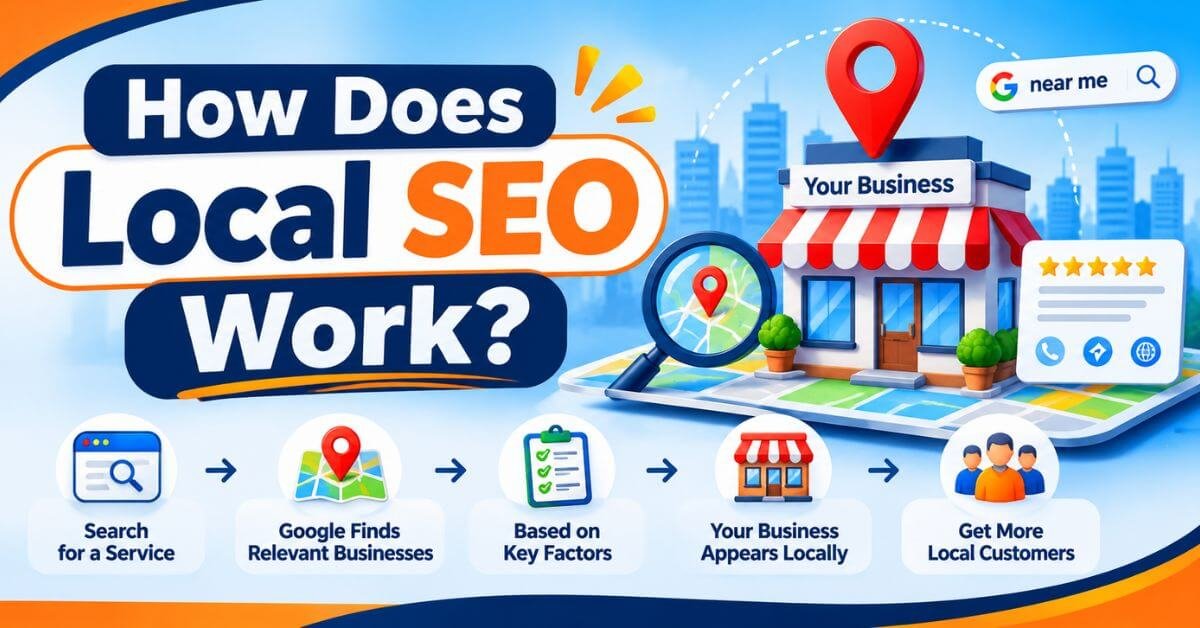
Google uses several factors to determine which businesses appear in local search results.
According to Google's local ranking guidance, three major factors influence local results:
1. Relevance
Relevance refers to how closely your business matches what someone is searching for.
For example, if someone searches for "Italian restaurant in Chandigarh," Google looks for businesses that offer relevant services.
To improve relevance:
2. Distance
Distance refers to how far a business is from the location specified in a search or the searcher's location.
For example, if someone searches for "coffee shop near me", Google considers the distance between the user and available businesses.
Businesses cannot directly control a searcher's location, but they should maintain accurate business addresses and service-area information.
3. Prominence
Prominence refers to how well-known a business is.
Google considers information such as online reviews, links, and other information available about a business.
Important Local SEO Ranking Factors
Understanding local SEO ranking factors helps you create a better optimisation strategy.
Here are some important areas to focus on:
1. Google Business Profile Optimisation
<escape>Google Business Profile (GBP)</escape> is one of the most important tools for local businesses.
It allows businesses to manage how their information appears on Google Search and Google Maps.
Optimise your profile by:
Keep your information accurate and regularly updated.
2. Local Keyword Research
Keyword research helps you understand what potential customers search for in your area.
Instead of targeting only broad keywords, use location-specific search terms.
Examples:
Use these keywords naturally in your website content, page titles, headings and service descriptions.
Avoid repeating location keywords unnecessarily.
3. Local SEO Website Optimization
Your website plays an important role in your overall local SEO strategy.
Make sure your website clearly communicates what your business offers and where you provide your services.
Important optimization activities include:
For example, a hotel operating in Dharamshala can create a dedicated page targeting accommodation-related searches in Dharamshala.
4. NAP Consistency
NAP stands for Name, Address and Phone Number.
Your business details should remain consistent across your website, Google Business Profile and relevant online directories.
For example, avoid using different phone numbers or slightly different business addresses across multiple platforms without a valid reason.
Consistent business information helps customers identify and contact your business.
5. Online Reviews and Ratings
Customer reviews are important for building trust and improving your online reputation.
Encourage genuine customers to share their experiences.
Some useful practices include:
6. Local Business Citations
A local citation is an online mention of your business information, such as its name, address and phone number.
Business directories and relevant local websites can help customers discover your business.
Focus on trustworthy and relevant platforms instead of submitting your business to hundreds of low-quality directories.
7. Mobile-Friendly Website
Many local searches happen on mobile devices.
Customers may search for nearby restaurants, hotels, shops or service providers while travelling or moving around their local area.
Your website should:
A poor mobile experience can cause potential customers to leave your website.
Step-by-Step Local SEO Strategy for Small Businesses

Now let's understand how to implement Local SEO practically.
Step 1: Create or Claim Your Google Business Profile
Visit Google Business Profile and create or claim your business listing.
Complete the verification process and provide accurate business details.
Step 2: Select the Right Business Category
Choose the category that best describes your main business activity.
For example, a digital marketing training institute should select the most appropriate education or training-related category available.
Do not select unrelated categories just to target more keywords.
Step 3: Optimize Your Website
Review your website's important pages.
Ensure that your business name, location, contact information, services and relevant keywords are clearly mentioned.
Step 4: Perform Local Keyword Research
Identify keywords that potential customers use when searching for your products or services.
Step 5: Create Useful Local Content
Publish informative content that answers the questions of your target audience.
For example, a travel agency in Himachal Pradesh can publish articles about local destinations, travel guides, accommodation and transportation.
Make sure your content provides genuine value rather than simply repeating location keywords.
Step 6: Collect Genuine Customer Reviews
Build a simple process for requesting feedback from satisfied customers.
Respond to reviews regularly and use feedback to improve your services.
Step 7: Build Quality Local Backlinks
Try to earn links from relevant local websites, business associations, trusted publications and genuine business partners.
Quality and relevance matter more than the total number of backlinks.
Step 8: Monitor Your SEO Performance
Use Google Search Console and Google Analytics to understand how your website performs.
You can monitor:
For Google Business Profile performance, review the available performance reports to understand customer interactions.
Local SEO vs Traditional SEO
Both Local SEO and traditional SEO aim to improve organic visibility, but their target audiences and strategies can differ.
For example, a hotel in Dharamshala may focus on Local SEO to attract nearby and destination-based customers, while a national travel website may focus on broader travel-related keywords.
Both strategies can work together.
Best Local SEO Tools for Small Businesses
You do not need expensive tools to start improving your local search visibility.
Here are some useful tools:
1. Google Business Profile
<escape>Google Business Profile</escape> helps you manage your business information, photographs, reviews and presence on Google.
2. Google Search Console
<escape>Google Search Console</escape> helps you monitor organic search performance, indexing issues, impressions, clicks and search queries.
3. Google Analytics 4
<escape>Google Analytics 4 (GA4)</escape> helps you understand website visitors, traffic sources, and user behaviour.
4. Google Keyword Planner
This tool helps you discover keyword ideas and understand search demand.
5. Google Maps
Google Maps helps you understand how local businesses appear to customers and how users discover nearby services.
6. Rank Math SEO
Rank Math is a WordPress SEO plugin that helps optimise page titles, meta descriptions, schema settings and other on-page SEO elements.
Common Local SEO Mistakes to Avoid
Many small businesses make mistakes that affect their local online visibility.
Avoid these common problems:
How Long Does Local SEO Take to Show Results?
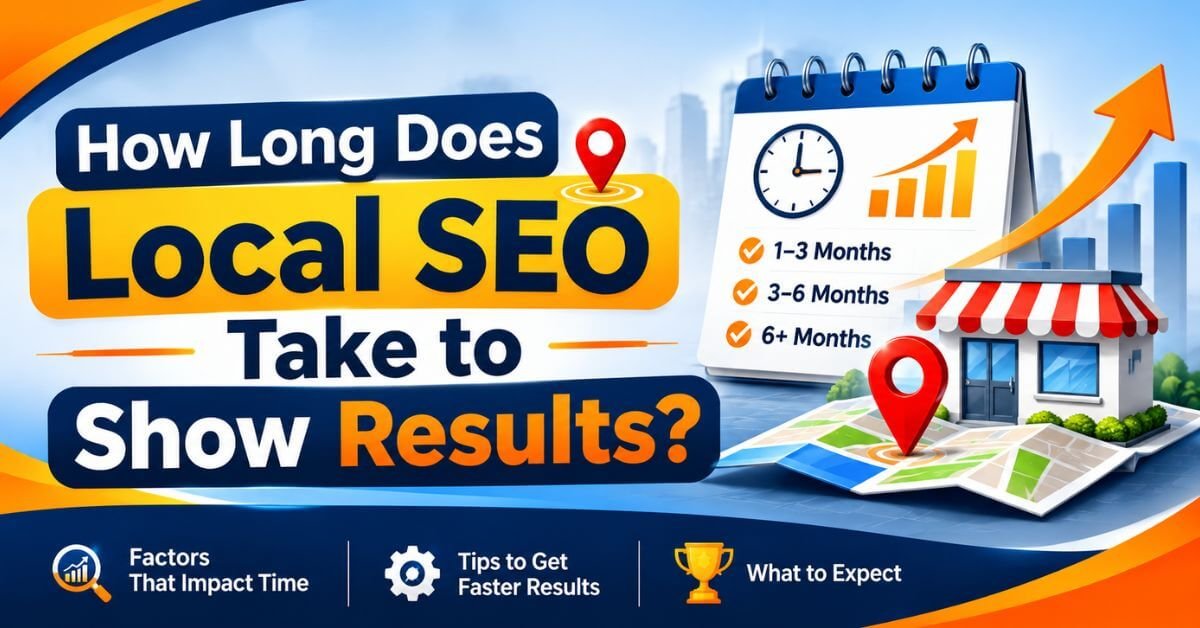
Local SEO is a long-term process, and there is no fixed timeline for achieving rankings.
Results depend on several factors, including:
Some improvements, such as correcting business information, can have an immediate practical benefit. However, building strong local visibility and competitive rankings generally requires consistent effort over time.
Avoid anyone promising guaranteed first-page rankings within a few days.
Final Thoughts
Local SEO is an important digital marketing strategy for small businesses that want to attract customers from specific geographical locations.
From Google Business Profile optimisation and local keyword research to customer reviews, website optimisation and quality backlinks, every activity contributes to building a stronger local online presence.
The key is to focus on genuine customers, accurate business information and useful content.
If you own a small business, start with your Google Business Profile, optimise your website and gradually build your local SEO strategy.
Remember: Local SEO is not just about appearing on Google. It is about helping the right customers discover your business when they need your products or services.
At KishorDigital Academy, we focus on practical digital marketing knowledge, SEO strategies and real-world learning to help students and business owners understand how digital marketing works.
Whether you need more leads, better online visibility or a complete digital marketing solution, our team is here to understand your goals and suggest the right approach for your business. Get in touch with KishorDigital today and let’s turn your digital goals into measurable results.
Frequently Asked Questions (FAQs)
Local SEO is the process of improving a business's online visibility for searches related to a particular location. It helps nearby customers discover local products and services through Google Search and Google Maps.
Yes. Local SEO helps small businesses reach relevant customers, improve local visibility, build trust and generate more calls, enquiries and website visits.
You can improve your local SEO by optimising your Google Business Profile, targeting relevant local keywords, maintaining consistent business information, collecting genuine reviews and creating useful website content.
Yes. Google Business Profile is a free tool that allows eligible businesses to manage their presence on Google Search and Google Maps.
NAP stands for Name, Address and Phone Number. These details should be accurate and consistent across your website and relevant online platforms.
Yes. An eligible business can use Google Business Profile without having a website. However, a well-optimised website can provide additional information, build credibility and help attract organic search traffic.
There is no guaranteed timeline. It depends on competition, location, business reputation, website quality and optimisation efforts. Consistent work is important for long-term results.