

SEO Strategy for Small Businesses: Complete Guide
Running a small business in today's competitive digital market is not easy. Whether you own a local shop, provide professional services, run an online store, or operate a startup, your potential customers are searching for products and services on Google every day.
A well-planned SEO strategy for small businesses helps your business appear in relevant search results, attract potential customers, build online visibility, and generate organic leads without depending entirely on paid advertising.
Search Engine Optimization (SEO) is not just about ranking a website on Google. It is about making your business easier to discover when people are actively searching for what you offer.
With 19 years of real-world digital marketing experience, one thing is clear: small businesses do not need complicated SEO campaigns to get started. They need the right strategy, consistent implementation, useful content, and regular performance monitoring.
In this complete guide, we will explain how small businesses can build an effective SEO strategy step by step, from keyword research and website optimization to local SEO, content marketing, backlinks, and AI search optimization.
A successful SEO Strategy for Small Businesses starts with understanding customer needs and search behaviour.
What Is an SEO Strategy for Small Businesses?
An SEO strategy for small businesses is a structured plan to improve a website's visibility in organic search results and attract relevant visitors who may become customers.
Unlike large companies with dedicated marketing teams and substantial budgets, small businesses need to focus on SEO activities that deliver meaningful results with available resources.
Every SEO Strategy for Small Businesses should focus on relevant keywords, useful content, and website performance.
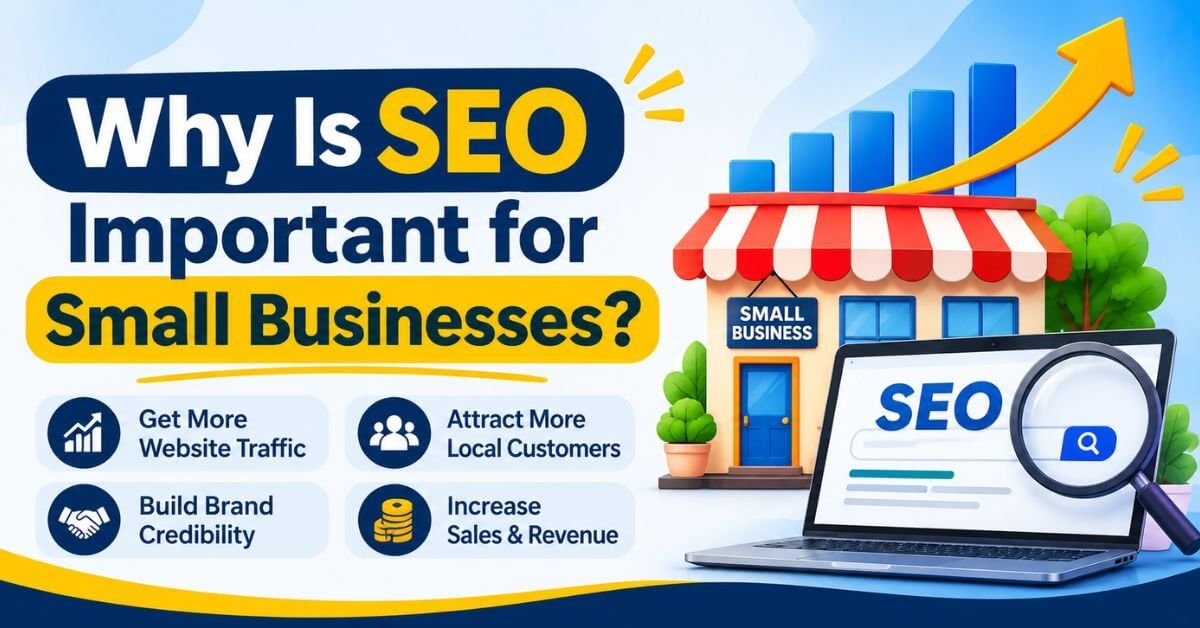
Why Is SEO Important for Small Businesses?
Many small businesses depend on referrals, social media, paid advertisements, or offline marketing to attract customers. These channels can be useful, but relying on only one source can limit long-term growth.
SEO helps businesses build a searchable online presence and reach customers when they are actively looking for solutions.
A well-planned SEO Strategy for Small Businesses helps companies build long-term organic visibility.
1. Increase Organic Website Traffic
SEO helps your website appear for relevant searches related to your products and services. When your pages match customer intent, they can attract visitors who are already interested in what you offer.
2. Generate Quality Leads
3. Build Brand Credibility
4. Reduce Long-Term Dependence on Paid Advertising
5. Compete With Larger Businesses
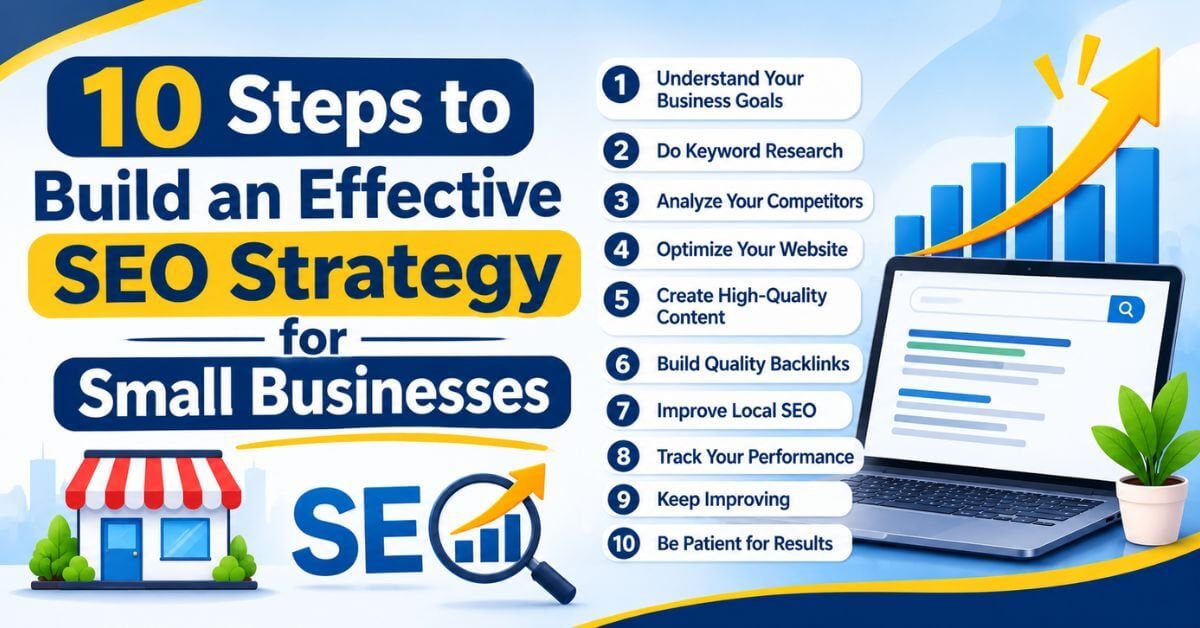
10 Steps to Build an Effective SEO Strategy for Small Businesses
Step 1: Understand Your Target Audience
An effective SEO Strategy for Small Businesses begins with identifying the right target audience.
For example, a local plumbing business should understand whether customers are searching for emergency plumbing, bathroom installation, water leakage repair, or general plumbing services.
Each search represents a different requirement and may need a separate service page.
Practical tip: Create a list of your main customer types, their problems, and the services that solve those problems. Use this information as the foundation of your SEO strategy.
Step 2: Perform Keyword Research
Keyword research helps you understand the exact words and phrases people use when searching for your business.
Small businesses should avoid targeting only highly competitive keywords. Instead, focus on a combination of primary, secondary, location-based, and long-tail keywords.
Keyword research is one of the most important parts of an SEO Strategy for Small Businesses.
Step 3: Optimize Your Website Structure
A clear website structure makes an SEO Strategy for Small Businesses easier to implement.
Home
About Us
Services
Service One
Service Two
Service Three
Blog
Contact Us
Every important service should have a dedicated page with original information, clear headings, relevant keywords, and a strong call to action.
Use descriptive URLs, logical navigation, and internal links to connect related pages.
example.com/services/seo-services/
A well-organized website helps visitors find information easily and makes it easier for search engines to discover related pages.
Step 4: Implement On-Page SEO
On-page optimization strengthens your SEO Strategy for Small Businesses by improving page relevance.
SEO Title: Write a unique and descriptive title that explains the page topic and naturally includes the primary keyword.
Meta Description: Create a useful summary that encourages users to visit the page.
H1 Heading: Use a clear main heading that describes the page's primary subject.
H2 and H3 Headings: Organize information into meaningful sections and subsections.
Keyword Placement: Include relevant keywords naturally in the introduction, headings, body content, and image descriptions where appropriate.
Image Optimization: Use descriptive file names, relevant alt text, and appropriately compressed images.
Internal Linking: Link related pages using meaningful anchor text so visitors can explore additional information.
Avoid keyword stuffing. Your content should sound natural and provide genuine value to readers.
Step 5: Focus on Technical SEO
Even useful content may struggle to perform if search engines cannot properly access, crawl, or understand your website.
Technical SEO helps maintain a healthy website foundation.
Technical improvements provide a strong foundation for your SEO Strategy for Small Businesses.
Use Google Search Console to monitor indexing issues and identify technical problems.
Also check website performance using Google PageSpeed Insights. Pay attention to loading performance, responsiveness, and visual stability.
Remember that technical SEO is not about achieving a perfect score in every testing tool. It is about making your website accessible, functional, and convenient for real users.
Step 6: Optimize Your Google Business Profile
Google Business Profile helps eligible businesses manage how their information appears on Google Search and Google Maps.
Local SEO should be an important component of an SEO Strategy for Small Businesses serving local customers.
Claim and verify your business profile.
Use your accurate business name.
Select the most relevant primary and additional categories.
Add correct contact details and business hours.
Write a clear business description.
Add genuine business photos and videos.
Publish useful updates regularly.
Encourage genuine customer reviews.
Respond to customer reviews professionally.
Keep business information accurate and consistent.
Step 7: Create Helpful SEO Blog Content
Your website should answer the questions customers ask before purchasing a product or contacting a service provider.
Helpful blog content makes your SEO Strategy for Small Businesses more valuable to potential customers.
Every article should have a clear purpose, answer a real question, and provide useful information that readers can act upon.
Publishing more articles does not automatically improve rankings. Quality, relevance, originality, and usefulness matter more than publishing frequency alone.
Step 8: Build Quality Backlinks
Quality backlinks can support your SEO Strategy for Small Businesses when they come from relevant sources.
Avoid buying large quantities of low-quality links, automated link-building schemes, and excessive exact-match anchor text. These practices can create risks under Google's spam policies.
Step 9: Optimize for AI Search, AEO and GEO
This makes Answer Engine Optimization (AEO) and Generative Engine Optimization (GEO) useful considerations within a broader search visibility strategy.
AI search optimization is becoming an additional consideration in a modern SEO Strategy for Small Businesses.
There is no guaranteed method to get mentioned in ChatGPT, Google AI Overviews, or other AI-generated answers. Focus on creating useful, reliable, accessible information that serves customers.
Step 10: Track SEO Performance and Improve Your Strategy
SEO is an ongoing process. You should regularly measure performance to understand which activities are producing results.
Use these tools:
Google Search Console: Monitor impressions, clicks, click-through rate, average position, indexing, and search queries.
Google Analytics 4: Understand website traffic, user engagement, important events, and conversions.
Google Business Profile Performance: Review available customer interactions and profile performance metrics.
PageSpeed Insights: Monitor website performance and Core Web Vitals.
Performance tracking helps improve your SEO Strategy for Small Businesses over time.
Small Business SEO Strategy: A 90-Day Action Plan
Following a structured SEO Strategy for Small Businesses makes it easier to prioritize marketing activities.
This is a suggested implementation schedule, not a promise of rankings within 90 days. SEO results depend on competition, website history, industry, content quality, and many other factors.
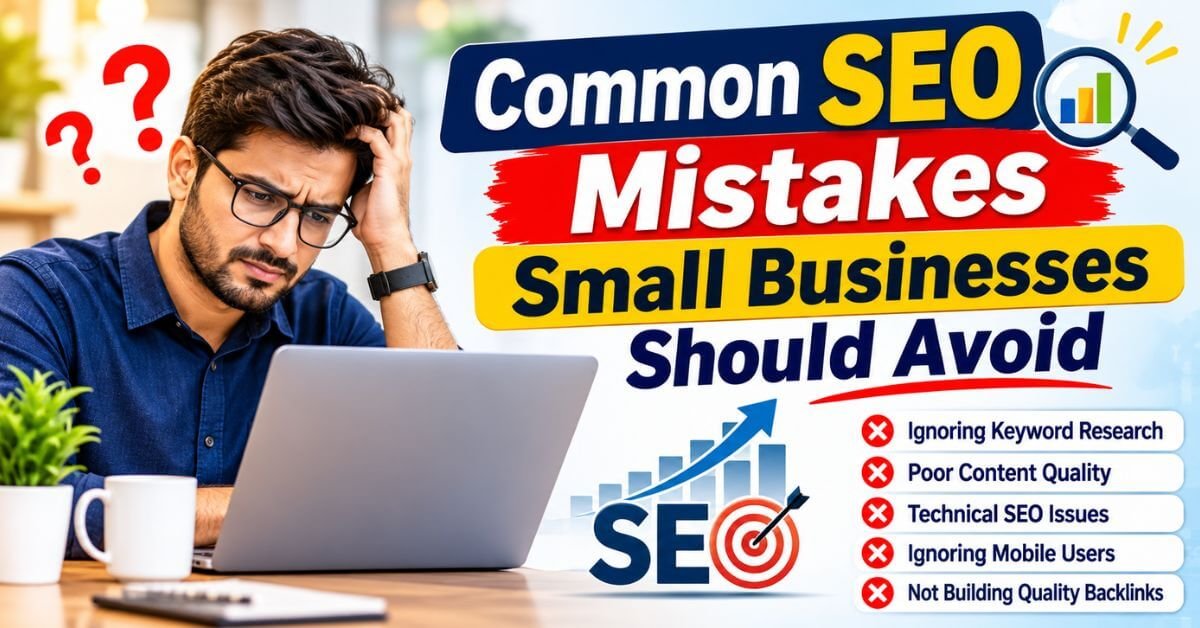
Common SEO Mistakes Small Businesses Should Avoid
Avoiding common SEO mistakes is essential for maintaining an effective SEO Strategy for Small Businesses.
How Much Does SEO Cost for a Small Business?
The cost of SEO depends on your business size, industry competition, website condition, target location, and the amount of work required.
A small local business may need basic technical improvements, Google Business Profile optimization, and a few well-developed service pages.
A competitive e-commerce business may require a larger investment in technical SEO, product optimization, content production, and digital PR.
Before selecting an SEO service provider, understand what is included in the package.
Final Thoughts: Build a Sustainable SEO Strategy for Your Small Business
A successful SEO strategy for small businesses is built through research, planning, implementation, and continuous improvement.
You do not need to compete for every keyword or publish hundreds of articles. Start by understanding your customers, optimizing your important website pages, improving local visibility, publishing useful content, and monitoring real business results.
SEO is a long-term investment in your online presence. When implemented correctly, it can help your business attract relevant visitors, build credibility, and generate valuable opportunities.
At KishorDigital, our approach to digital marketing focuses on practical implementation, search visibility, AI-powered optimization, and real-world business growth.
If you want to improve your website's organic visibility, start with a proper SEO audit and build a strategy around your business goals.
Ready to improve your online visibility?
A consistent SEO Strategy for Small Businesses can support sustainable online growth.
Whether you need more leads, better online visibility or a complete digital marketing solution, our team is here to understand your goals and suggest the right approach for your business. Get in touch with KishorDigital today and let’s turn your digital goals into measurable results.